

Africa selfdrive for first timers
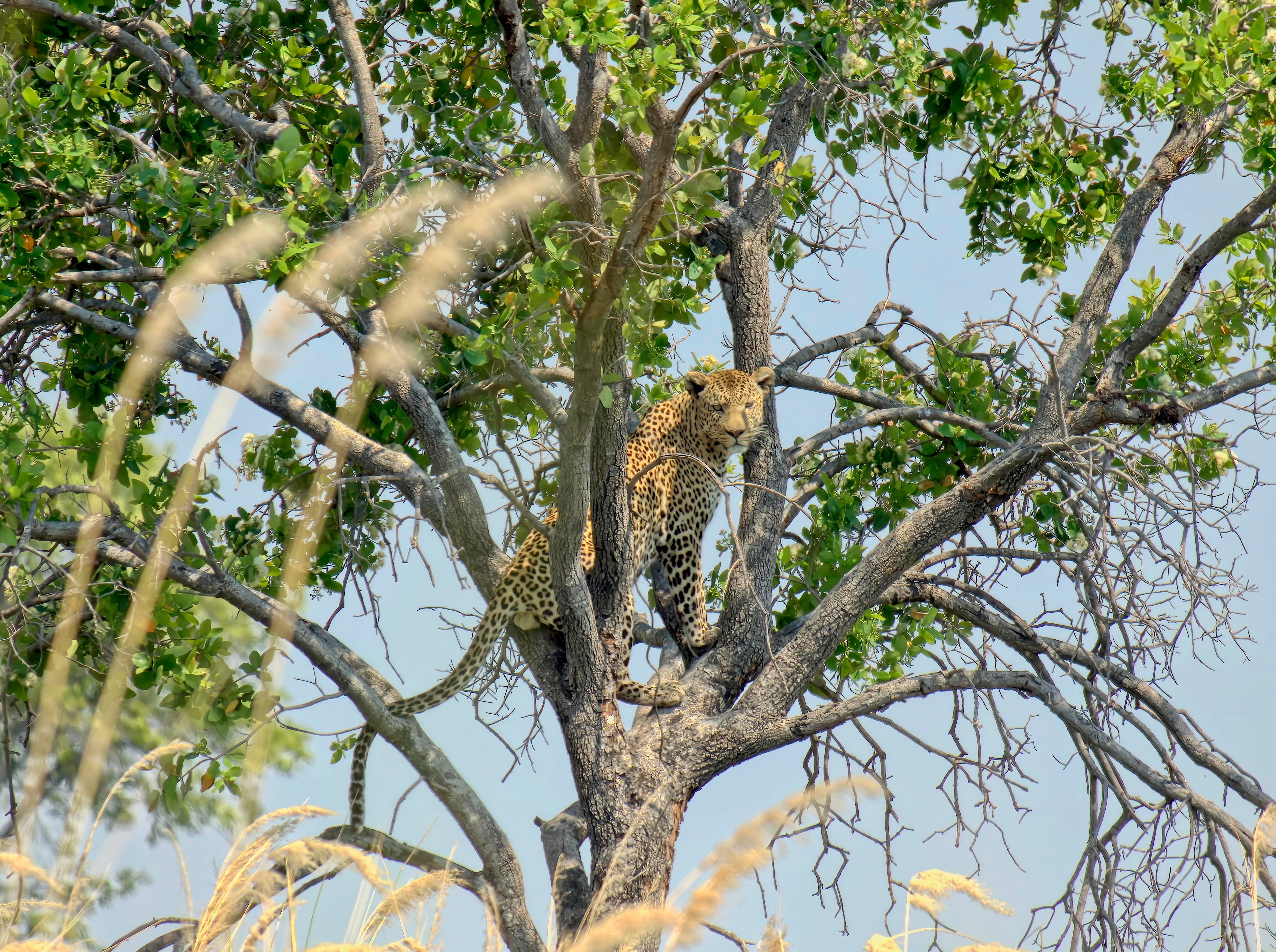
Every self-drive in Africa has that moment when the city falls away behind you and the road opens up ahead. No guide to follow, just your trusty 4x4, a full tank and a continent that greets you as though your arrival were long overdue. The question we hear most from first-timers is not where to go, but whether they can. Our answer is always yes. Here’s where to begin, and how.
You don’t need to be an experienced 4x4 driver
The secret to a first trip lies less in knowing Africa and more in a little confidence and a willingness to adapt, while having our team of experts behind you certainly helps. Our routes have been shaped by our own time behind the wheel so that anyone, including first-timers, can drive them, and we stay by your side the whole way through our app. Every journey can be shaped around you: gentler for some, with sandier tracks and more technical off-road stretches for those who seek a little more.
Start with a destination that makes self-driving easy
South Africa fits a remarkable amount within one border. Start in Cape Town, with the penguins of Boulders Beach and the vineyards of the Cape Winelands nearby. From there, climb into the Karoo, where historic towns such as Prince Albert seem to have stopped their clocks a century ago. The road then winds along the Garden Route to a parting of the ways: carry on east to the Wild Coast, where green hills roll down to the Indian Ocean, or head north towards the bushveld of Kruger National Park. Dusty tracks, loose gravel and a pothole or two (Africa is generous with those!) are all part of the journey, and a 4x4 with good clearance takes them all in its stride.
South Africa and Namibia are the most affordable safari destinations on the continent, and their parks need no driver or guide, though both are always available if you'd like. In Kruger, the bush rewards those who set off at first light, and every kilometre after that is another chance to spot one of the Big Five. By sunset you are back at camp, leaving the bush to its night shift.
Then there are the neighbours. South Africa shares its borders with six countries, and two of them lie cradled within: Lesotho, enclosed on every side, and Eswatini, very nearly so. Many of our routes reach one or both, so a single journey can take you into two of the last three kingdoms in Africa. If you’re unsure where to begin, our South Africa & Eswatini Wildlife & Zulu Coast route is the one we most often recommend to first-timers.
The most famous road into Lesotho is the Sani Pass. Its final stretch is gravel, steep and cut into the mountainside in tight hairpins, making it accessible to 4x4s only. It asks for patience rather than expertise: a low gear, a steady hand and, for any passenger less fond of heights, a little faith in the driver. At the top, some 2,876 metres above sea level, awaits Africa's highest pub. From its windows, the Drakensberg stretches away towards KwaZulu-Natal, a view that deserves your time.
Discover Namibia at your own pace
Namibia is a country of very long roads and few people. The classic loop from Windhoek begins among the red dunes of Sossusvlei, and the road carries on until it meets the Atlantic at Swakopmund. Further north, the Skeleton Coast is one of the few places on earth where desert touches sea. Whale bones and wrecked ships once littered its shore and earned it its name, while Portuguese sailors called it the Gates of Hell. Today the shipwrecks lie half-buried in the sand and seals crowd the rocks at Cape Cross, all within easy reach of a self-driver on the salt road north from Swakopmund. From there, the road turns inland towards Damaraland and the waterholes of Etosha.
The gravel roads are well kept and clearly signposted, and the 4x4 earns its keep on the corrugations. We know which stretches take longer than the map lets on, and plan your days around them. Can you drive to Deadvlei yourself? You can. The road from Sesriem is tarred as far as the last car park, and the final five kilometres of deep sand are exactly what four-wheel drive was made for, before a short walk to the pan and its ancient, blackened trees.
Experience the ultimate safari in Kenya and Tanzania
For many people, East Africa is where the idea began: lions in golden grass, acacias against the sky, and the Great Migration. More than a million wildebeest, joined by hundreds of thousands of zebras, thunder across the plains in an endless loop between Tanzania's Serengeti and Kenya's Masai Mara, in search of fresh grazing, on a journey far older than the border it crosses. Every year, travellers come from all over the world to witness it, many of them on their first visit to Africa. This year, one of them could be you.
Our Kenya routes begin in Nairobi, reachable by direct flight from many European cities, including Amsterdam, Brussels and London. The shortest, the Kenya Classic, is the one we recommend for a first trip. It takes in the highlights, from the slopes of Mount Kenya to Lake Naivasha, where you can cycle past giraffes at Hell’s Gate, and on to the Masai Mara, on roads our team has found well suited to first-timers. In the Mara, the route heads for the Mara Triangle, the only part of the reserve you can drive yourself, and its roads are kept in very good condition.
In Tanzania, you fly into Kilimanjaro Airport near Arusha, and a ten-day itinerary can take you through Tarangire, the Ngorongoro Crater and the Serengeti. The roads in between are dusty tracks across open plains, with the odd rough stretch, though nothing that calls for an expert. And where a stretch gets rougher than a first trip needs, we know the gentler way round. Down on the crater floor, inside a volcano that collapsed some two and a half million years ago, live around 25,000 creatures, the Big Five among them. The way down is by 4x4 only, on steep, but doable tracks that wind down from the rim.
Don’t be afraid to sleep in the wild
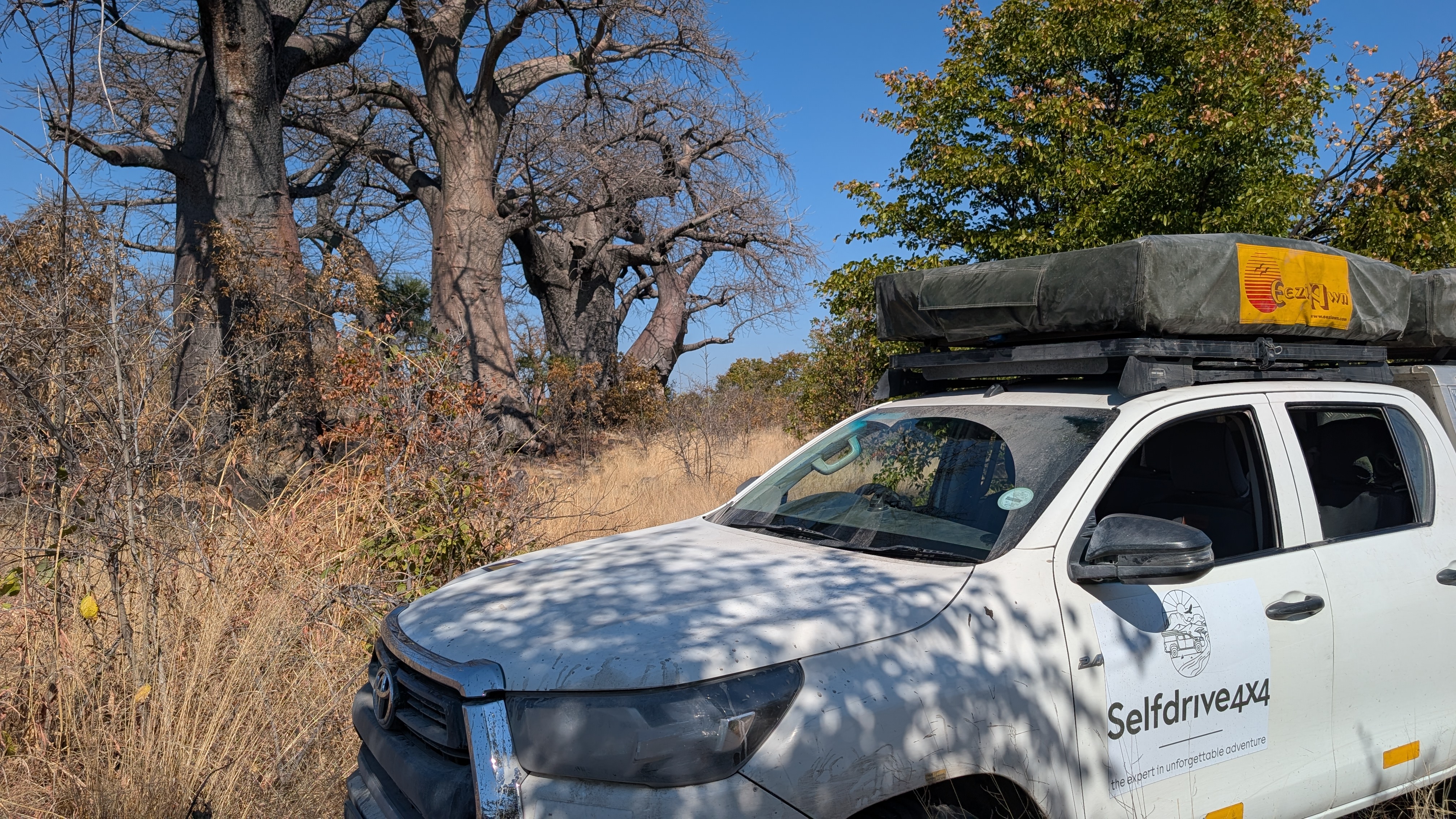
Many of our travellers choose to camp, some for a night or two, but many for the entirety of their journey. Our routes can be tailored to the balance of camping and lodges that suits you. Dinner is whatever fits in one pan, and the stars, far from any town, put on the evening show. Around the campfire, old stories are told while new ones quietly begin.
Which brings us to the inevitable question, and you need not apologise for asking it: will I be eaten by a lion? The short answer is probably not. It is the closed tent itself, not its height, that keeps you safe. Animals treat a zipped tent as a solid object rather than a meal, on the roof or on the ground. Many rest camps, including those in Kruger, are fenced for added peace of mind. The rooftop simply brings a flat mattress, a breeze and a little distance from the ants and anything else that walks on six legs. In all our years, not one of our travellers has been eaten by an animal of any kind, a record we intend to keep.
Choose the season, not the country
Our team's best advice for first-timers is simple: avoid the rainy season, not the destination. Every country we offer welcomes first-timers. What changes through the year is the road beneath your wheels.
In Uganda, the drier months from June to August and December to February make the drives to Kibale and Bwindi far more comfortable. In Botswana, the dry season draws elephants to the banks of the Chobe River by the hundreds, while the rains can force the closure of the route between Khwai and Xakanaxa and soften the salt crusts of the Makgadikgadi Pans, leaving them largely impassable. In Tanzania, the long rains of April and May can turn the roads between the parks to mud.
Rainfall and water levels shift from one year to the next, but the landscape doesn’t. Our team has driven these routes through many seasons and over many years, so we know which tracks will hold and when to take the long way round.
So should your dates fall in the rains, there is no cause for concern: many of our itineraries reroute with the seasons, because life doesn’t wait for the dry season. We’ll help you choose the where and when.
Madagascar is easier to explore than you think
Madagascar keeps its own time, and it does not take long to set your watch by it. Most of its wildlife lives nowhere else on earth, and the slower rhythm comes with gentler prices too, from roadside stalls to some lovely lodges. The RN7 makes the natural introduction: one long road south from Antananarivo through rice terraces and highland towns, past the ring-tailed lemurs of Anja, to the sandstone canyons of Isalo. With only one road to follow, a wrong turn takes real effort.
Out west lies the Avenue of the Baobabs, perhaps the most famous view in the country. The wild coast around it is a world of sandy tracks and river crossings that the rains reshape each year. This is why we designed a route that includes a local navigator, so that even this corner of Madagascar opens itself to the first-timer. And when it is time to trade the road for the beach, Nosy Be is only a short flight away.
Where to next?
Take comfort in this: many have braved these roads before you, and many more will discover them in the decades to come. You are neither the first nor the last to venture into Africa for the first time. Africa is wild. Africa is unpredictable. But Africa is welcoming, and it has a way of making room for all who come with an open mind.
The roads may surprise you, and now and then they might just ask a little more. Yet somewhere between the last packing up of the rooftop tent and the folding of the camping chairs, one question consistently arises: where to next?
Also interesting
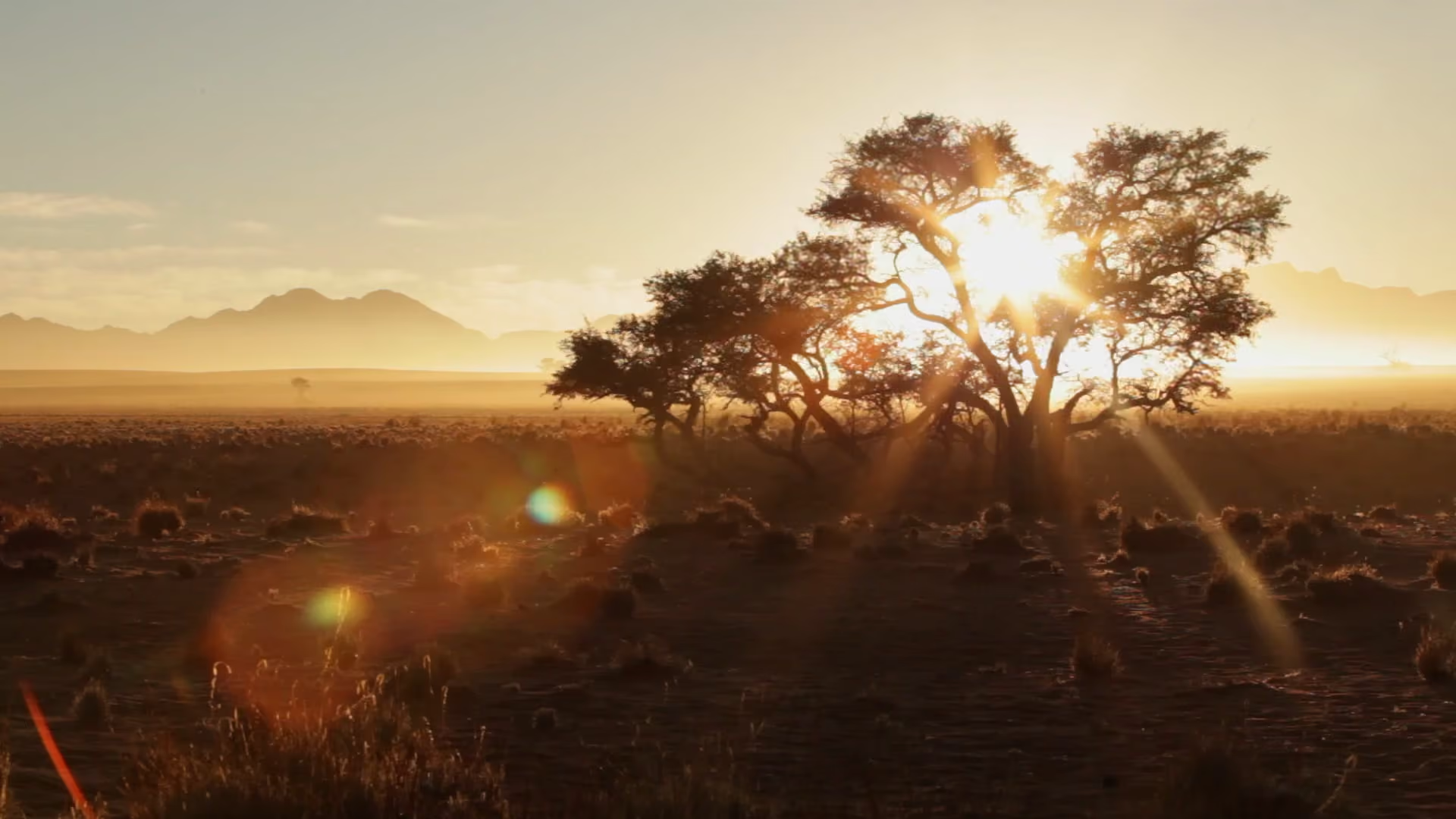
Step in and discover the adventure.
Discover what it feels like to drive through endless landscapes, wild nature, and deserted desert routes yourself. With our fully equipped 4x4s, you experience Africa in the most adventurous way: free, comfortable, and entirely at your own pace.