
Need help?
We’re here for you.
Frequently asked questions
A trip to Southern Africa requires some preparation. We understand that you can run into a number of questions. Below you will find the frequently asked questionsIs your question not listed? Please contact us by email or telephone!
General questions and security
Both Kenya and Tanzania offer plenty of opportunities to see wildlife in its natural habitat, including the Big Five. Each country, however, has its own character.
Kenya is known for the Masai Mara, a relatively compact wildlife area with a high concentration of animals. You can explore its open savannahs and, depending on the season, see the great migration herds.
Tanzania offers a different variety of landscapes. In the Serengeti, you'll travel across vast plains, while the Ngorongoro Crater provides a very different safari setting. Around Ndutu, you may encounter large herds of wildebeest with their newborn calves during the calving season.
Budget is another consideration. Park entrance and permit fees are often higher in Tanzania, but Kenya isn't automatically less expensive. The fees for visiting the Masai Mara can add considerably to the cost of your journey.
The right destination depends on your travel dates, budget and the areas you'd most like to explore. We'll help you compare the options and choose a route that suits your travel plans.
June, July and August are excellent months for a self-drive trip through Africa. Much of Southern Africa is in its dry season, offering good opportunities to spot wildlife.
In Namibia, Botswana, Zimbabwe and Malawi, you can explore a variety of safari routes. Kruger National Park in South Africa is also a good choice during this period. Madagascar and Uganda are equally interesting destinations to consider.
Hoping to witness the Great Migration? Around June, the herds are often found in the western Serengeti. From July onwards, they generally move further north towards the northern Serengeti and Kenya's Masai Mara. Their exact location depends on rainfall and the movements of the herds.
Keep in mind that nights in Southern Africa can be surprisingly cold, especially if you're travelling with a rooftop tent. June to August also coincides with the European summer holidays, so planning ahead gives you more choice when it comes to accommodation and routes.
We'll help you put together a self-drive journey that suits the season, the wildlife you'd love to see and the way you prefer to travel.
December is a lovely time to explore certain parts of Africa. South Africa and Tanzania are particularly interesting options, depending on what you'd like to experience during your self-drive trip.
In Cape Town and along the Cape Coast, it's summer. You can enjoy warm days, beaches and scenic drives along the coast and through the countryside.
Tanzania is also worth considering. During this period, the herds of the Great Migration generally move towards the southern plains, depending on rainfall and the availability of fresh grass.
We'll help you choose a route that suits the season and your travel plans. Thinking of travelling over Christmas? Keep in mind that accommodation can fill up quickly. Planning early gives you more choice when it comes to places to stay and routes to explore.
Africa is a destination you can explore throughout the year. The best time for your self-drive trip depends on which countries you'd like to visit and what you hope to experience along the way. Even within a single country, weather conditions can vary considerably.
January to March: summer in Southern Africa, newborn wildlife in East Africa
Cape Town and the Cape Coast enjoy warm summer days. Around Ndutu in Tanzania, large numbers of wildebeest calves are born, particularly in February. January and February are also often relatively dry months in Uganda.
Kruger National Park can be hot and rainy during this period. In Madagascar, we'll plan your route with the rainy season in mind.
April and May: the seasons begin to change
In South Africa, summer gives way to autumn. From May onwards, the drier travel season gradually begins in Namibia, Botswana, Zimbabwe and Malawi.
Kenya and Tanzania often experience their long rains during these months. Road conditions can become more challenging, particularly on remote routes.
June to August: dry months and excellent safari opportunities
These are rewarding months for a self-drive safari in Namibia, Botswana, Zimbabwe, Malawi and Kruger National Park. Madagascar and Uganda also offer good opportunities for exploring.
In East Africa, the Great Migration moves north. During July and August, you may witness river crossings, depending on the movements of the herds.
If you're travelling through Southern Africa with a rooftop tent, be prepared for cold nights and pack plenty of warm layers.
September and October: wildlife gathers around waterholes
Across much of Southern Africa, animals gather around the remaining water sources, creating good opportunities for wildlife viewing. Madagascar, the northern Serengeti and the Masai Mara are also worth considering during this period.
Temperatures in Namibia, Botswana and Zimbabwe can rise considerably in October. Setting off early and planning your days around the heat makes a difference.
November and December: the rains return
Summer begins in Cape Town. In Tanzania, the herds of the Great Migration generally start moving south again, following the fresh grass.
The rainy season returns to many safari areas. Some roads become more difficult to navigate, so we'll carefully adjust your route and accommodation plans to suit the conditions. If you're travelling over Christmas, it's wise to arrange your accommodation well in advance.
A route that suits your travel dates
These are general seasonal guidelines rather than weather guarantees. Conditions can vary between regions and from one year to the next.
Tell us when you'd like to travel and what you'd love to experience. We'll help you put together a self-drive itinerary that takes the seasons, road conditions and accommodation options into account, so you can make the most of your time in Africa.
That depends mainly on which animals you'd love to see and how adventurous you want your journey to be. Each country has its own landscapes, wildlife and opportunities to explore on safari.
In South Africa, Kruger National Park is an accessible choice for your first self-drive safari. In Namibia, you can watch wildlife gather around the waterholes in Etosha, while Botswana takes you deeper into the wilderness.
Kenya and Tanzania are known for the Great Migration, which you can experience in different areas depending on the season. In Uganda, you can track gorillas and chimpanzees on guided treks. And in Madagascar, you can watch lemurs moving through the treetops.
We'll help you choose a destination and route that suit the wildlife you'd like to see, your driving experience and the way you prefer to travel.
From remote desert roads to rugged mountain landscapes and challenging 4x4 tracks, Africa has plenty to offer travellers who want to venture beyond the usual routes.
In Tanzania, you can descend into the Ngorongoro Crater, driving through a remarkable landscape surrounded by wildlife. Namibia offers the remote wilderness of the Skeleton Coast, while Morocco invites you to explore desert roads and sand dunes.
Madagascar also has routes for those looking for a greater challenge. Our Ultimate Overland route takes you through rainforests, along remote coastlines and across demanding 4x4 tracks. On certain sections, a local pisteur (navigator) joins you to help navigate the terrain.
How adventurous your journey becomes depends on your driving experience and what you'd like to encounter along the way. We'll help you choose a route that offers the right level of challenge for you.
A self-drive trip through Africa can easily be combined with hiking in the mountains. Whether you prefer a few hours on foot or a multi-day trek where you leave your 4x4 behind for a while, there are plenty of possibilities.
In Kenya, you can hike around Mount Kenya. Uganda is home to the Rwenzori Mountains and Mount Elgon, while South Africa offers hiking trails through the Drakensberg and Cederberg mountains. Tanzania also has plenty to offer, including guided walks and multi-day climbs on Mount Kilimanjaro.
We'll help you choose hikes that suit your experience and fitness level, and work them into your self-drive itinerary. That way, you'll experience Africa's landscapes both from behind the wheel and on foot.
South Africa and Namibia are good choices if you're looking for an affordable self-drive adventure in Africa. Particularly when exploring national parks on your own, you have plenty of flexibility to plan a trip that suits your budget.
Kenya and Madagascar are also worth considering. Flights to Kenya from Europe are often relatively affordable. In Madagascar, daily travel costs are generally lower, with budget-friendly places to stay and landscapes quite different from those on mainland Africa.
Which destination offers the best value for your trip depends on when you travel, the route you choose and where you prefer to stay. We'll help you put together a journey that fits your interests and budget.
Several African destinations are well suited to a self-drive adventure with children. The right destination for your family depends mainly on your children's ages and interests.
In South Africa, you can look for the Big Five in Kruger National Park or watch penguins at Boulders Beach near Cape Town. In Botswana, you can see elephants from the water on a boat trip along the Chobe River. And in Tanzania, you can combine a safari with a few relaxing days on the beaches of Zanzibar.
We'll look at what your family would love to experience and how much time your children are comfortable spending in the car. Together, we'll choose a route with a comfortable pace and plenty of variety for the whole family.
For more inspiration, read our blog Travelling in Africa with Children.
Nee, voor veel van onze selfdrive-reizen door Afrika heb je geen ervaring met offroad rijden nodig. Voor veel reizigers begint hun eerste 4x4-avontuur juist hier.
We helpen je een route te kiezen die past bij jouw rijervaring en waar je je prettig bij voelt. Zijn er onderweg trajecten waarvoor extra rijvaardigheid of een lokale gids nodig is? Dan bespreken we dat duidelijk met je voordat je boekt.
Daarnaast vind je in de Selfdrive4x4-app uitgebreide rij-instructies die je helpen om je voor te bereiden op uitdagendere stukken van de route. Zo ga je met vertrouwen zelf op pad.
Every African country we offer has routes suitable for your first self-drive adventure. Where you choose to begin depends mainly on what you'd love to see and experience.
Would you like to spot wildlife, drive through vast desert landscapes, spend time on the beach or experience a mix of different landscapes? We'll help you choose a destination and route that suit your interests and driving experience.
For more inspiration, read our blog Africa for Beginners. Tell us what you're looking for in a journey, and we'll help you find a destination that feels right for you.
Questions about food, drinks and groceries
Once you've approved your travel proposal, we'll get to work. We'll check the availability of your 4x4 and start arranging your journey.
Until all arrangements have been confirmed, your booking remains subject to availability.
We'll keep you updated throughout the process. If a vehicle or accommodation isn't available, we'll discuss the alternatives with you and adjust your itinerary where needed.
Step by step, we'll put together a journey that fits your travel plans.
After booking your self-drive trip, you'll receive an invoice for a deposit of 35% of the total trip cost, with a minimum of €500 per invoice.
The remaining balance must be paid no later than eight weeks before departure, so your trip is fully paid for before you set off.
Travelling within three months of booking? In that case, the full trip cost is due immediately after booking, without a separate deposit payment.
If your booking includes permits, entrance fees, national park fees or flights, these costs will be invoiced in full at the time of booking.
Your invoice will clearly show the amounts due and the deadlines for each payment.
Sometimes travel plans change. If you need to cancel your self-drive trip, please let us know by email. The date we receive your cancellation determines which cancellation fees apply.
You'll find the exact terms and applicable fees in the general terms and conditions on our website. That way, you'll know what to expect if your journey can't go ahead as planned.
You usually won't need a driver for a self-drive trip through Africa. The freedom of being behind the wheel is part of what makes the journey special, even if it's your first self-drive adventure.
We'll help you choose a route that suits your driving experience and that you feel comfortable with.
Would you prefer to leave the driving to someone else? We can arrange a driver for you in advance. We'll also let you know where a local guide is required.
Vertrek
Yes, a one-way 4x4 rental is possible. This means you won't have to drive the same route back, leaving more time to explore along the way.
You can collect your 4x4 in Ivato and return it in Toliara or Ankify in the north. Ankify is a convenient finishing point if you're continuing your journey to Nosy Be.
The options depend on availability and your planned route. An additional one-way rental fee applies.
Share your travel plans with us, and we'll confirm availability, the route and the applicable fee in advance.
The minimum age to rent a 4x4 in Africa varies by country and rental company. It generally ranges from 18 to 25 years. Younger drivers may be subject to a higher insurance excess.
Before you book, we will check and confirm the age and driving licence requirements for your chosen 4x4.
Children also need their own passport and, depending on the destination, a visa or eTA. If you are travelling to Namibia or Botswana with children under the age of 18, you will also need a full birth certificate, either the original or a certified copy. If a child is travelling with only one parent, additional parental consent or custody documents may be required. We recommend checking the latest entry requirements for each country before departure.
Whether you need a visa depends on your passport and the countries you plan to visit. If you hold a European passport, you will need a visa for many African destinations. We therefore recommend checking the latest visa requirements well before your departure.
Questions about the 4×4 rental car
From your 4x4 to a lodge surrounded by nature. At Selfdrive4x4, we can put together your complete self-drive journey, including your rental vehicle, accommodation and overnight stays in national parks.
You can choose one of our suggested itineraries or work with one of our travel specialists to create a route that suits your plans.
We'll coordinate your 4x4 rental, accommodation and national park reservations, subject to availability. This brings every part of your journey together, without you having to arrange everything yourself.
Explore our suggested itineraries or tell us how you'd like to travel through Africa.
During your self-drive journey, you'll have all the important route information close at hand. You'll get access to the Selfdrive4x4 app, where your personal itinerary, vouchers and detailed driving instructions are conveniently kept in one place.
A GPS device is also included as standard when you book a complete self-drive trip with us. This gives you different ways to navigate your route along the way.
Renting just a 4x4 without a complete itinerary? We'll help you explore which navigation tools we can arrange for your journey.
When travelling through Africa with a camping 4x4, there are certain expenses you'll need to cover yourself. These include fuel, road tolls and any traffic fines.
Some aspects of your rental may also involve additional charges, such as returning your 4x4 to a different location, cross-border documentation, extra drivers and any applicable young-driver surcharges.
Additional accessories and Full Cover insurance are not included as standard, unless specifically stated in your quotation.
Extra charges may also apply for transfers and for collecting or returning your vehicle on certain days or outside regular hours.
Your personal quotation clearly outlines what's included and which costs are charged separately, so you know what to budget for before setting off.
When collecting and returning your camping 4x4, transfers between the rental location and the airport or your accommodation are included. This applies on the first and last day of your rental, for distances of up to 20 kilometres and during regular opening hours.
If the distance exceeds 20 kilometres or you need a transfer on another day, additional charges apply.
A surcharge may also apply when collecting or returning your 4x4 at weekends, on public holidays or outside regular opening hours.
We'll go through the practical arrangements with you in advance, so you know where and when your transfer is scheduled and whether any additional costs apply.
When you rent a camping 4x4 with Selfdrive4x4, the main rental costs are already included. That way, you'll know what's been arranged before departure and can focus on the journey ahead.
You'll receive a 4x4 in your booked vehicle category and configuration, with unlimited mileage and Standard Cover insurance. Two registered drivers, local technical support and 24-hour roadside assistance are also included.
Mandatory contract and administration fees, standard cleaning costs and local taxes are included in the rental price.
The make, model and exact specifications may vary between vehicles. We'll explain which vehicle configuration applies to your booking and what you can expect along the way.
With a fully equipped camping 4x4, you'll have everything you need to cook, eat and sleep along the way. You decide where to stop and enjoy life outdoors, surrounded by nature.
Depending on the vehicle, your 4x4 comes with one or more rooftop tents and/or ground tents, mattresses and a complete sleeping setup. Camping chairs, a table, a fridge and water storage or a water supply are also included.
For preparing meals, you'll have cooking facilities, pots and pans, kitchen utensils, plates, cups and cutlery. The equipment is matched to the number of travellers in your booking.
The exact equipment and tent configuration vary by vehicle. We'll let you know what's included with your 4x4 before departure, so you can set off well prepared.
With Selfdrive4x4, you'll know what's been arranged for your journey before you set off. Your personal itinerary clearly outlines everything that's included, based on your route and the way you travel.
Your trip includes your 4x4, your selected camping equipment, GPS and accommodation. Public campsites may be excluded where indicated in your itinerary. Meals and permits are also included wherever specifically mentioned.
Along the way, you can count on our support and specialist advice. You'll also have access to our travel app, where your complete itinerary, vouchers and detailed driving instructions are all kept in one place.
That way, you'll have the practical information you need close at hand and know what's already been taken care of throughout your journey.
Yes, in many cases you can travel through several African countries with a rental 4x4 on your self-drive trip. Many of our routes combine South Africa, Namibia, Botswana and Zimbabwe. Kenya and Tanzania are also a popular combination.
Some border crossings require additional documents and may involve extra costs. There can also be restrictions on where you can take your rental vehicle, depending on the country and route.
If you're renting a 4x4 from us without a complete itinerary, let us know in advance which countries you'd like to visit. We'll arrange the necessary paperwork, include any additional border-crossing costs in your quote and explain which restrictions apply to your vehicle. That way, you'll know exactly what to expect before setting off.
Yes, we recommend booking your international and domestic flights yourself. Flights are not included in our trips.
Before booking, check your travel dates and airports with us. This way, we can make sure your flights fit smoothly into your itinerary.
Need help booking your flights? Feel free to get in touch with us.
The permits we arrange for you depend on your travel itinerary. You pay most national park entry fees locally.
For example, we arrange gorilla and chimpanzee permits in Uganda, as well as the permits required in advance for Ngorongoro in Tanzania. In Botswana, we also arrange campsites, park entry fees and permits for the Central Kalahari, where these are included in your trip.
Your travel itinerary clearly explains what we arrange for you and which costs are included or excluded.
Questions about money and payments
Knowing your travel payments are protected matters. Selfdrive4x4 is a brand of Tongasabi Travel B.V., which is affiliated with the Dutch Travel Guarantee Fund (SGR).
If Tongasabi Travel B.V. is unable to provide your trip due to financial insolvency, SGR arranges a refund of your travel payments or the continuation of your journey, subject to the terms and conditions of the guarantee scheme.
This means you know what financial protection applies when you book your self-drive trip with us.
Cancellation insurance isn't mandatory, but we recommend taking out a policy. You've been looking forward to your self-drive adventure, yet sometimes plans change unexpectedly.
Cancellation insurance may reimburse cancellation costs or unused travel days if you need to cancel or cut your trip short for a reason covered by your policy.
Before taking out insurance, check the insured trip value, any exclusions and the deadline for purchasing your policy. Keep in mind that cancellation insurance is separate from the cancellation terms of your booking.
You can also arrange cancellation insurance through Selfdrive4x4 with a.s.r. We'll help you explore the options, so you understand which costs are covered and which are not before your journey begins.
The insurance excess on your rental 4x4 depends on your destination and the type of vehicle you choose. You'll find the exact amount in your booking documents.
With the included Standard Cover, the excess ranges from €500 to €3,500 per covered incident, depending on the vehicle and the country you're travelling in.
Prefer to reduce your excess? Full Cover provides additional coverage or reimbursement, with a lower excess that is often reduced to €0.
Keep in mind that not all types of damage are covered. If damage is excluded from the policy or the rental terms are breached, your financial liability may be higher.
We'll explain the coverage that applies to your 4x4 before departure, so you know exactly what to expect when you set off.
Every 4x4 rental and self-drive trip includes Standard Cover insurance. This comes with an excess that varies depending on your destination and the type of vehicle you rent.
If you live in the Netherlands or Belgium, we recommend additional insurance through a.s.r. This covers the rental vehicle excess in accordance with the policy terms and conditions, giving you greater clarity about potential costs if something happens along the way.
Living in another country? We'll help you explore the most comprehensive insurance coverage available for your 4x4.
Having the right travel insurance is important when exploring Africa by 4x4. Your rental vehicle's insurance is separate from your personal travel insurance, so it's worth making sure you're properly covered before setting off.
When choosing travel insurance, check that your policy covers medical expenses, emergency medical evacuation, repatriation and the activities you're planning during your trip. Make sure the coverage also applies to all the countries you'll be visiting.
As an agent of a.s.r., we can help you arrange travel and cancellation insurance. You're also free to take out a policy with another insurance provider.
Additional insurance requirements apply in Tanzania. For Zanzibar, a local travel insurance policy is mandatory and must be purchased online before arrival. Different local insurance requirements may apply to mainland Tanzania, which can be arranged locally. We recommend checking the latest requirements before departure.
That way, you'll know which insurance policies you need and can set off on your self-drive adventure with peace of mind.
A safari in Africa doesn't have to be expensive. South Africa and Namibia are particularly good choices if you want to see wildlife without spending a fortune. Entrance fees at many national parks are relatively low, often less than €40 per adult per day.
A safari in the Serengeti or Ngorongoro Crater in Tanzania generally requires a larger budget. The same applies to gorilla and chimpanzee trekking in Uganda, where park fees and permits are considerably higher.
Your total costs depend on which parks you visit, how many days you spend there and the activities you choose. We'll help you balance your interests and budget, so you can decide which experiences are worth spending a little more on.
In larger towns and cities, debit and credit cards are often accepted, particularly Visa and Mastercard. At smaller shops and in remote areas, you will often need cash.
We therefore recommend carrying some local currency throughout your trip. Make sure you also have a payment card handy, as many national park entrance gates require electronic payment.
Questions about the campsites
A local guide can travel with you in the 4x4 you rent from us. You'll stay behind the wheel while benefiting from the knowledge of someone who knows the area well.
A guide can help you spot wildlife, explain animal behaviour and navigate the tracks through the wildlife areas. There's no need to hire a separate safari vehicle.
Let us know in advance where you'd like a guide to join you. We'll check availability, seating capacity in your 4x4 and any requirements set by the parks you're planning to visit.
That way, you can travel independently while drawing on local expertise whenever it adds value to your journey.
Camping without fences brings you close to the African bush. Wildlife may move through or around your campsite. It's a special experience, but one that requires a few important safety precautions.
Always store food and rubbish securely, and never keep food inside your tent. Before nightfall, put away loose items that might attract the attention of animals.
Give wildlife plenty of space and never approach or feed animals. Stay close to your campsite after sunset and avoid walking around unnecessarily in the dark.
Always follow the safety instructions provided by the campsite, the rangers and Selfdrive4x4. That way, you'll know how to behave responsibly in an area where wildlife roams freely.
During your trip, you'll find the emergency contact numbers for your local rental company in the Selfdrive4x4 app. Our team is also available 24/7 via WhatsApp to help coordinate assistance and guide you through the next steps.
In case of a medical emergency, contact the local emergency services first, followed by your travel insurance provider.
Save the most important emergency numbers on your phone before you leave. That way, you'll have them close at hand whenever you need them.
Camping in Africa brings you close to nature. Many campsites are fenced, but in some places, you'll be staying right in the bush, with no fence between you and the wildlife.
That's why it's important to take a few precautions. Keep food and rubbish securely stored in your vehicle, always maintain a safe distance from wild animals and follow the campsite's guidelines, especially after sunset.
With the right preparation, you can enjoy camping in the African wilderness with confidence. And for a little extra reassurance: in over 25 years, not a single one of our travellers has been eaten by a lion.
Africa welcomes millions of travellers every year, drawn by its wildlife, vast landscapes and warm hospitality. Safety varies from country to country and even between regions.
With over 25 years of experience and thousands of trips organised, we know how important a well-planned route is. We carefully select our destinations and plan every journey with your safety as a priority.
You'll follow routes that many travellers have driven before you. We also share our local knowledge, practical tips and advice, so you can set off well prepared and travel with confidence.
On a self-drive trip through Africa, you'll encounter different types of roads, from paved roads and gravel tracks to rougher 4x4 trails. Even main roads can have potholes. The drive itself is part of the adventure.
We offer routes for both first-time self-drive travellers and experienced drivers looking for more technically challenging terrain.
Before your trip, we'll discuss your driving experience and what you feel comfortable with. This helps us find a route that suits your experience, confidence and sense of adventure.
If your rental 4x4 breaks down during your trip, you can rely on 24-hour roadside assistance. Contact the local rental company using the emergency number provided in your Selfdrive4x4 app.
Our team is also available 24/7 via WhatsApp. We'll help coordinate the next steps and keep you informed.
Please bear in mind that assistance may take longer to reach you in remote areas.
The Selfdrive4x4 app keeps all your important travel information in one place. You'll find your itinerary, vouchers, accommodation details and roadbook together in the app.
It also helps you prepare for each day of your journey, with detailed driving instructions, Tracks4Africa search terms and detailed maps for selected routes.
This way, you'll have the information you need close at hand throughout your trip.
The risk of malaria varies by region, even within the same country. Yellow fever requirements depend on your travel route and any stopovers along the way.
Are you travelling with young children or would you prefer to avoid areas where malaria is present? We offer many malaria-free routes and can help you plan your trip accordingly. Always discuss your final itinerary with a travel health specialist.
Check the CDC travel advice for each destination.
Eten, drinken en benodigdheden
Your camping 4x4 comes with the basic equipment you need for your journey. Everything is matched to the number of travellers in your booking, so you'll have what you need to cook, eat and sleep along the way.
There are a few things you'll need to bring yourself or purchase during your trip. These include towels, torches, personal toiletries, food and drinking water.
Consumable supplies such as toilet paper, firewood and charcoal are also at your own expense. You can buy these along the way, depending on the facilities available along your route.
That means you won't need to bring a complete set of camping equipment and can keep your luggage focused on your personal essentials.
You'll generally find petrol stations along main roads and in larger towns across Africa. In remote areas, however, distances between fuel stations can be considerable, and fuel may not always be available.
That's why we recommend filling up your tank before heading into remote areas and keeping enough fuel in reserve for longer stretches.
We monitor the local fuel situation and keep you informed of any changes. We'll also help you plan fuel stops along your route, so you can set off well prepared.
In larger towns across Africa, you'll usually find supermarkets where you can buy groceries and bottled drinking water. In more remote areas, shops and other facilities can be harder to find.
Before setting off on longer drives, make sure you have enough food and drinking water, and always carry extra water. Choose water from sealed bottles or water that has been properly treated.
The Selfdrive4x4 app and our travel information help you plan where to stock up along your route. That way, you'll be well prepared, even when travelling through remote areas for several days.
Yes, all our fully equipped camping 4x4s come with a fridge. This allows you to keep your food and drinks cool while travelling, even when you're on the road for several days.
Renting a 4x4 without camping equipment? It may be possible to rent a separate fridge, depending on the vehicle. We'll be happy to check what's available for your rental 4x4.
You won't need a satellite phone for most routes through Africa. However, if you're travelling through remote areas without mobile network coverage, a satellite phone can be useful.
Some countries restrict or prohibit the use of satellite phones, so always check with us before bringing one.
We'll explain the local regulations and can arrange a satellite phone for you where permitted and available.
For a self-drive trip through Africa, we recommend bringing soft travel bags, comfortable clothing you can layer and a few practical essentials. This will help you prepare for your journey.
Our complete packing list covers what you need to bring. We're also happy to advise you on what to pack specifically for your destination.
Any questions before the adventure begins?
If your question isn’t listed here, please feel free to contact us.
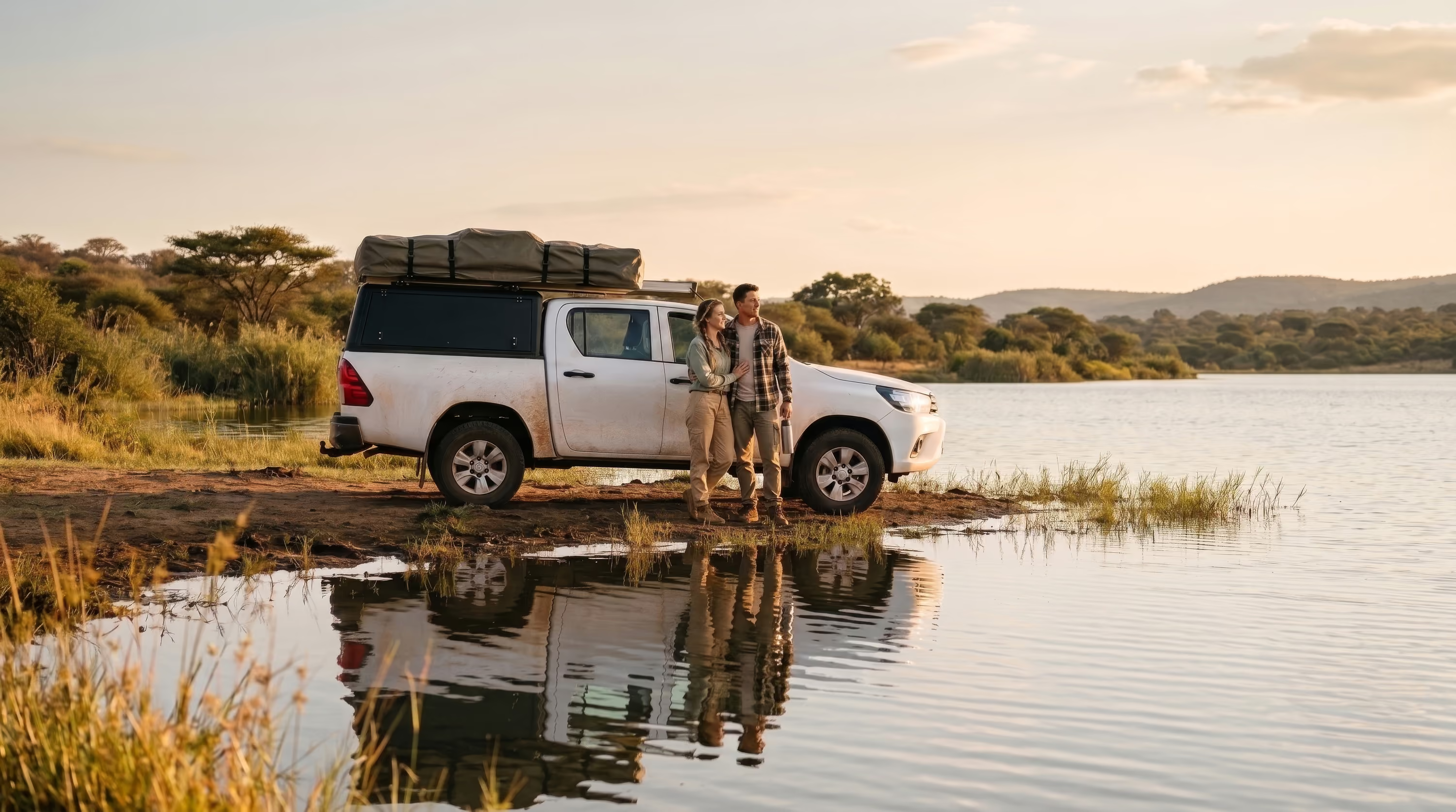
You are traveling independently, but never alone.
That is the promise we make to every traveler who leaves with us. You drive. You decide. But if there is anything—a question, a problem, or a doubt—we are there. Via WhatsApp, phone, or the app. Day and night, our local partners in Namibia, Botswana, and South Africa have their phones on. All you have to do is call.
Fastest option for questions on the go
Call
For urgent situations (Mon–Fri 09:00–17:00)
For non-urgent questions
The App
For everything you already know, vouchers, routes, and contact details are in your app.
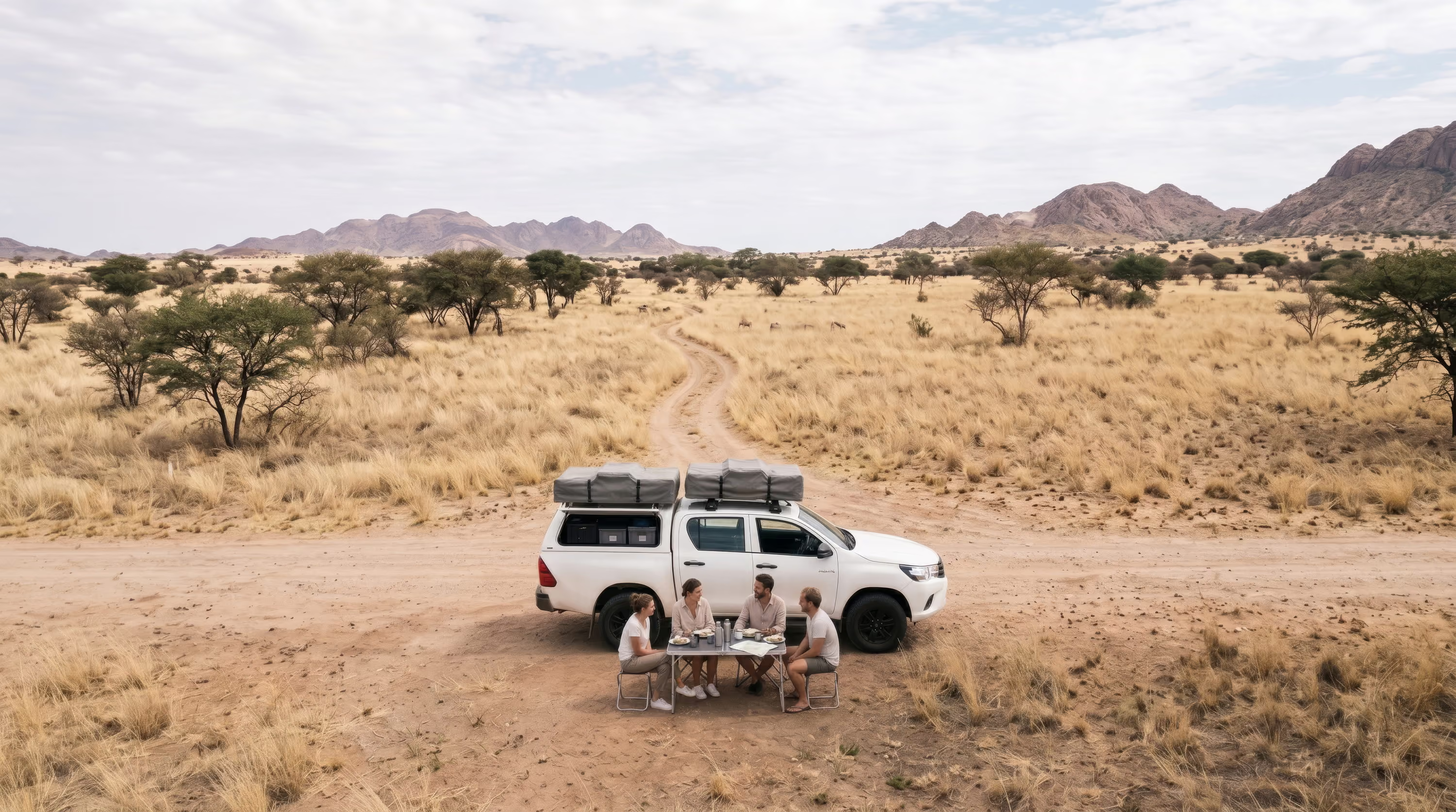
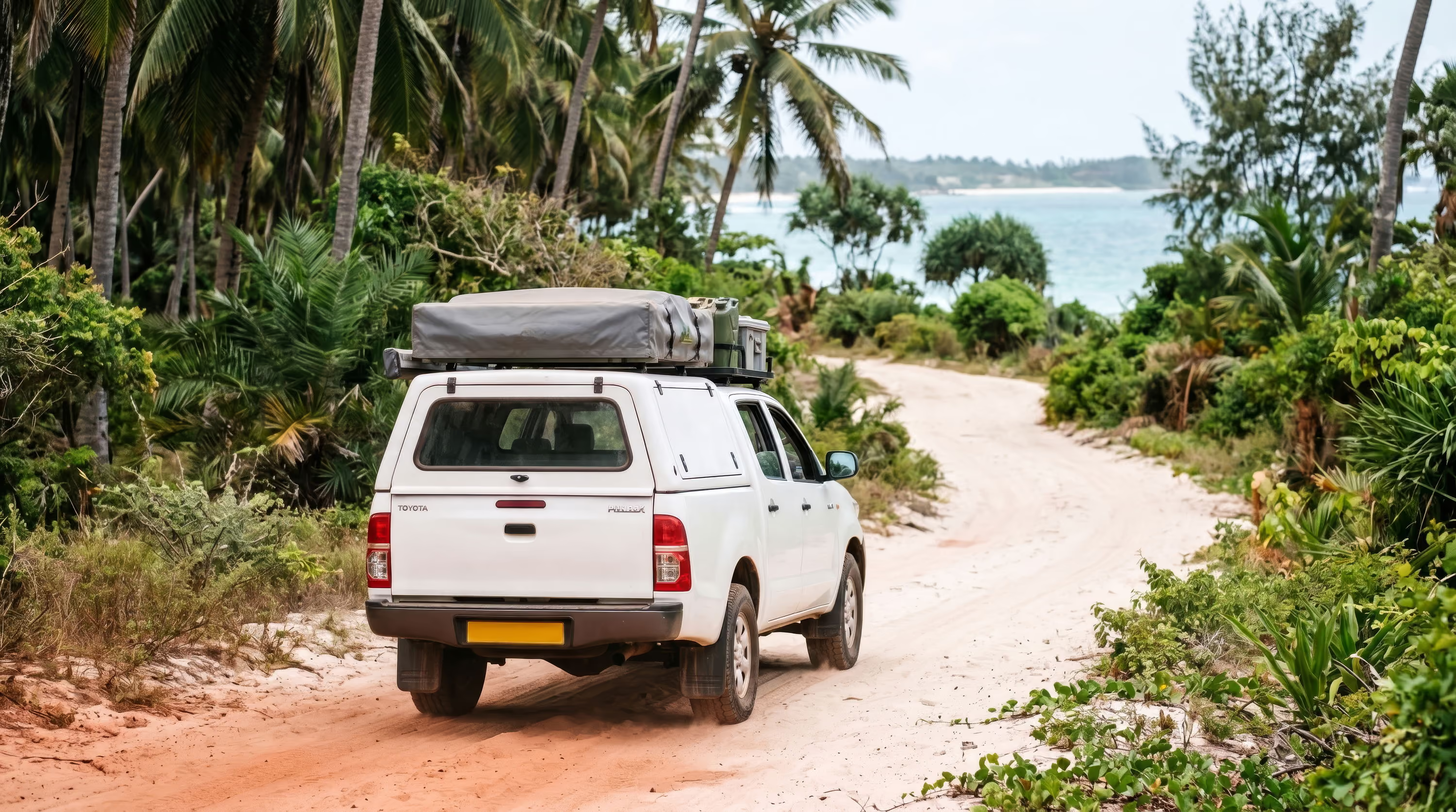
“We won't send you into the bush without a net. Every traveler who sets off with us knows that there is a team behind them, from the moment you first make contact until the day you return home. Not because we have to, but because we know how nice it is to know that someone is there for you when you need it. You drive. We are ready."
Hans Schoelink